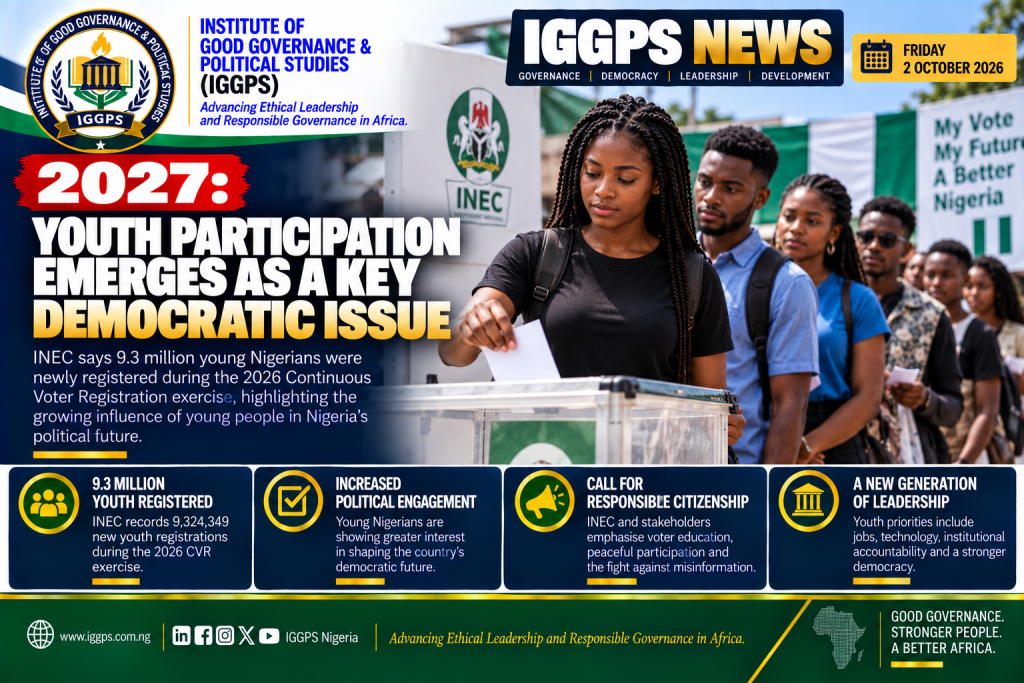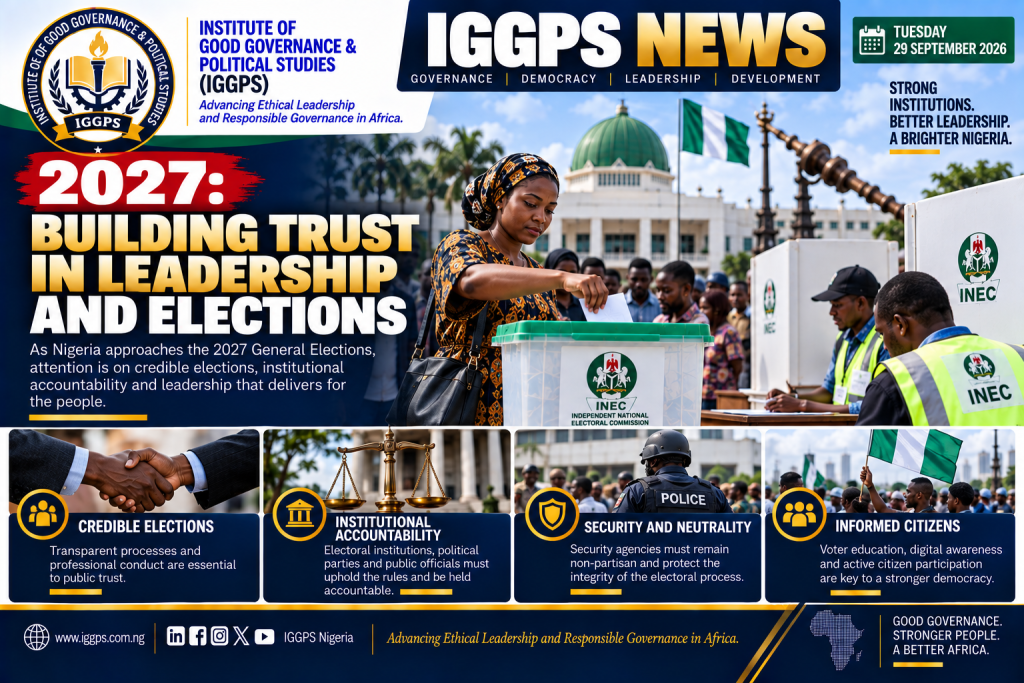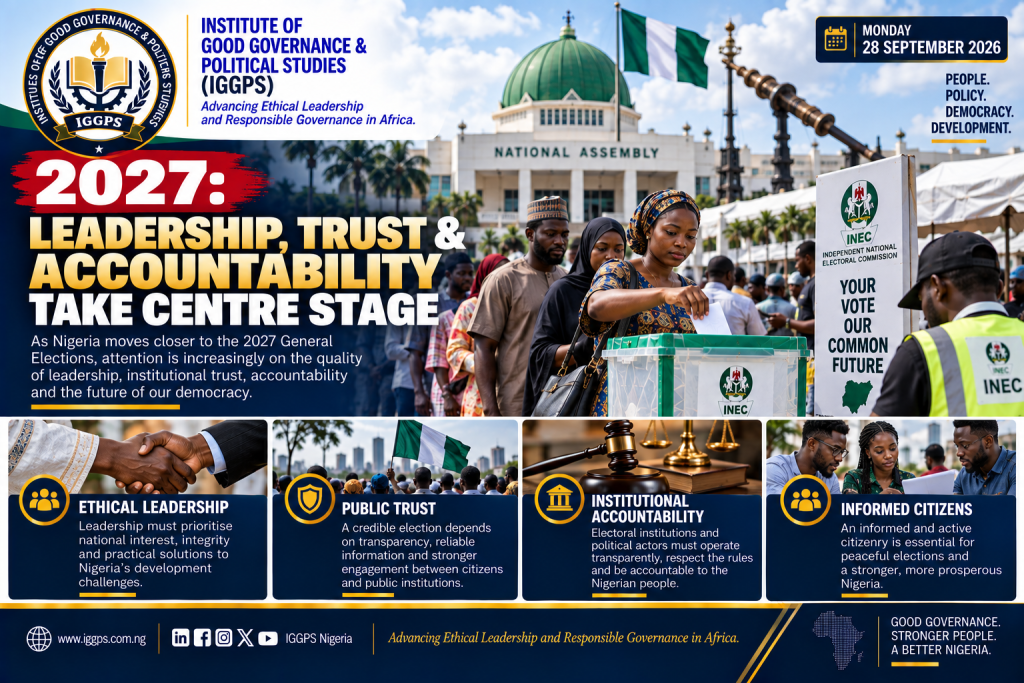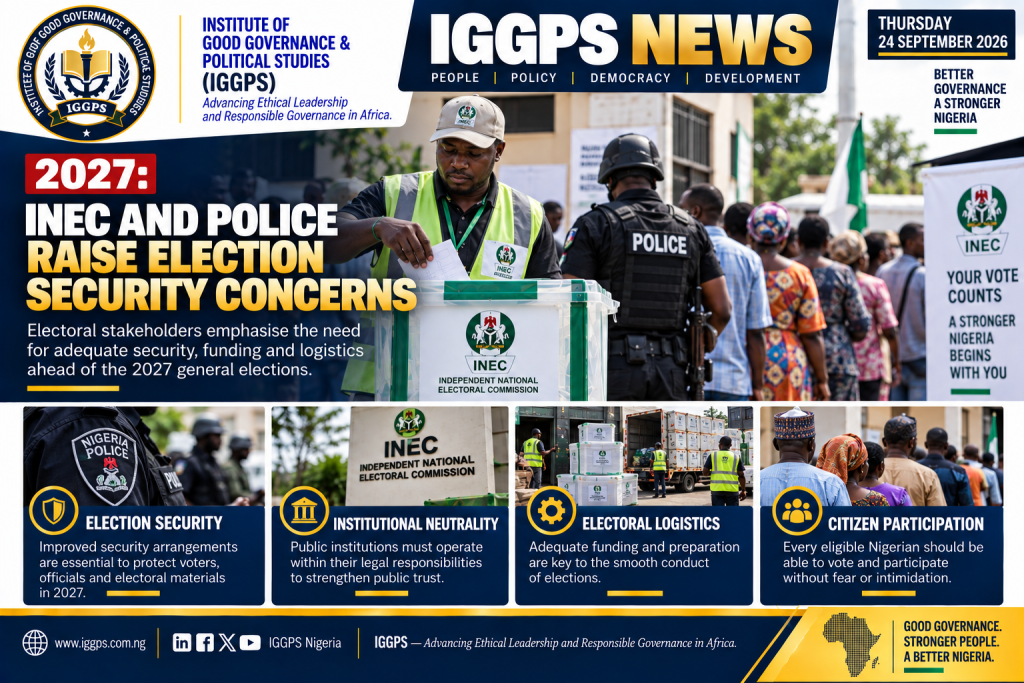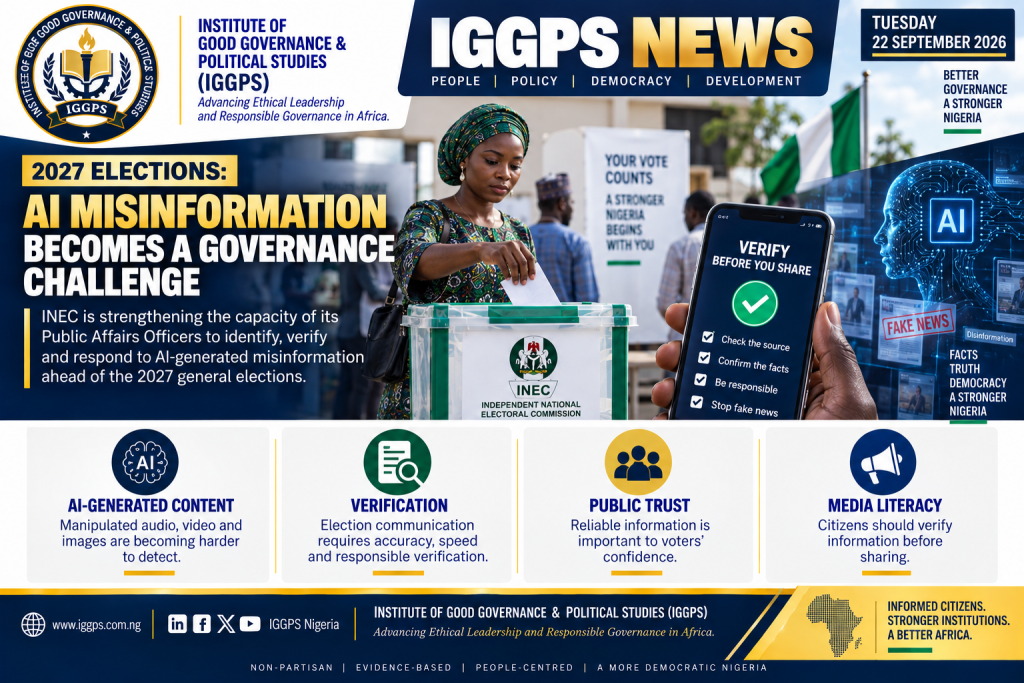

As Nigeria moves deeper into the 2027 election cycle, attention is increasingly turning beyond political campaigns to the quality of leadership, institutional accountability and public trust that will shape the next phase of Nigeria’s democratic development.
INEC has confirmed that the Presidential and National Assembly elections are scheduled for 16 January 2027, while Governorship and State House of Assembly elections are scheduled for 6 February 2027. INEC says preparations are progressing, including readiness assessments across the country and improvements involving BVAS and result-management processes.
Recent developments also highlight the importance of leadership within political organisations. Reports indicate that several parties are dealing with internal disputes, litigation and disagreements over structures and campaign organisation even as the campaign period progresses. These developments place renewed attention on how political parties manage internal democracy, resolve disagreements and present credible programmes to citizens.
INEC Chairman Prof. Joash Amupitan has also emphasised neutrality, transparency and public trust, stating that the Commission has no candidate or political party to favour. INEC has further identified security, funding, communication and misinformation as important areas requiring sustained attention ahead of the elections.
The Leadership Question
For Nigeria’s 2027 democratic process, leadership will involve more than the personalities seeking office. It also concerns the strength of institutions, respect for electoral rules, accountability of political actors, quality of public debate and citizens’ ability to make informed choices.
As campaigns develop, the governance conversation can therefore examine what candidates and parties propose on economic development, security, education, healthcare, institutional reform, employment and responsible public administration.
IGGPS POSITION:
The 2027 election cycle provides an opportunity for sustained national dialogue on ethical leadership, responsible governance, institutional accountability and the relationship between citizens and those entrusted with public office.