
Nigeria’s preparations for the 2027 General Elections have entered another important legal phase following a recent Supreme Court decision upholding provisions of the Electoral Act 2026 relating to political-party membership registers and internal party primaries.
The Supreme Court held that the requirements contained in Sections 77(5)– (7) and 84(2) of the Electoral Act are intended to promote fair and transparent party primaries, congresses and conventions. Under the provisions, political parties are required to submit their digital membership registers to INEC at least 21 days before scheduled primaries, congresses or conventions, and only members whose names appear on the submitted register are eligible to vote or be voted for in those processes.
The judgment also restored the legal consequences for parties that fail to comply with the stipulated membership-register requirements, reversing an earlier Court of Appeal decision that had declared the relevant provisions unconstitutional. The Supreme Court’s position therefore places renewed emphasis on the relationship between political-party organisation, internal democracy and the wider electoral process.
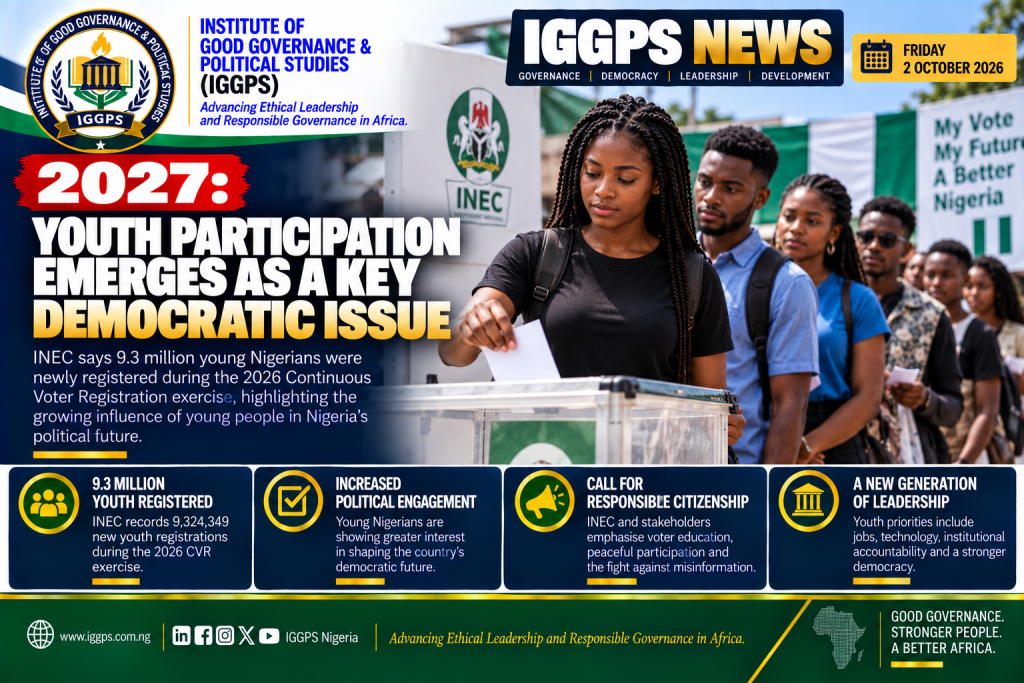
The development comes as INEC intensifies preparations for the 2027 elections. The Commission has adopted a “Zero-Failure” operational strategy covering early deployment of election materials, security coordination and training of election personnel. INEC has also announced that nationwide collection of newly issued PVCs will begin on 9 October 2026, following more than 10.7 million new registrations across three phases of the Continuous Voter Registration exercise, subject to biometric verification.
Why It Matters for Democratic Governance
Political parties remain central to Nigeria’s electoral system because they nominate candidates and organise the political structures through which citizens contest for public office. The Supreme Court decision places particular emphasis on transparent membership records and clearly defined procedures for selecting candidates.
For citizens, the broader governance question is how these legal requirements will translate into transparent party processes, credible candidate selection and greater accountability within political organisations ahead of 2027.
The development also reinforces the importance of strong electoral institutions, respect for the rule of law and informed citizen participation as Nigeria moves toward the January 16, 2027 presidential and National Assembly elections and the February 6, 2027 governorship and State House of Assembly elections.