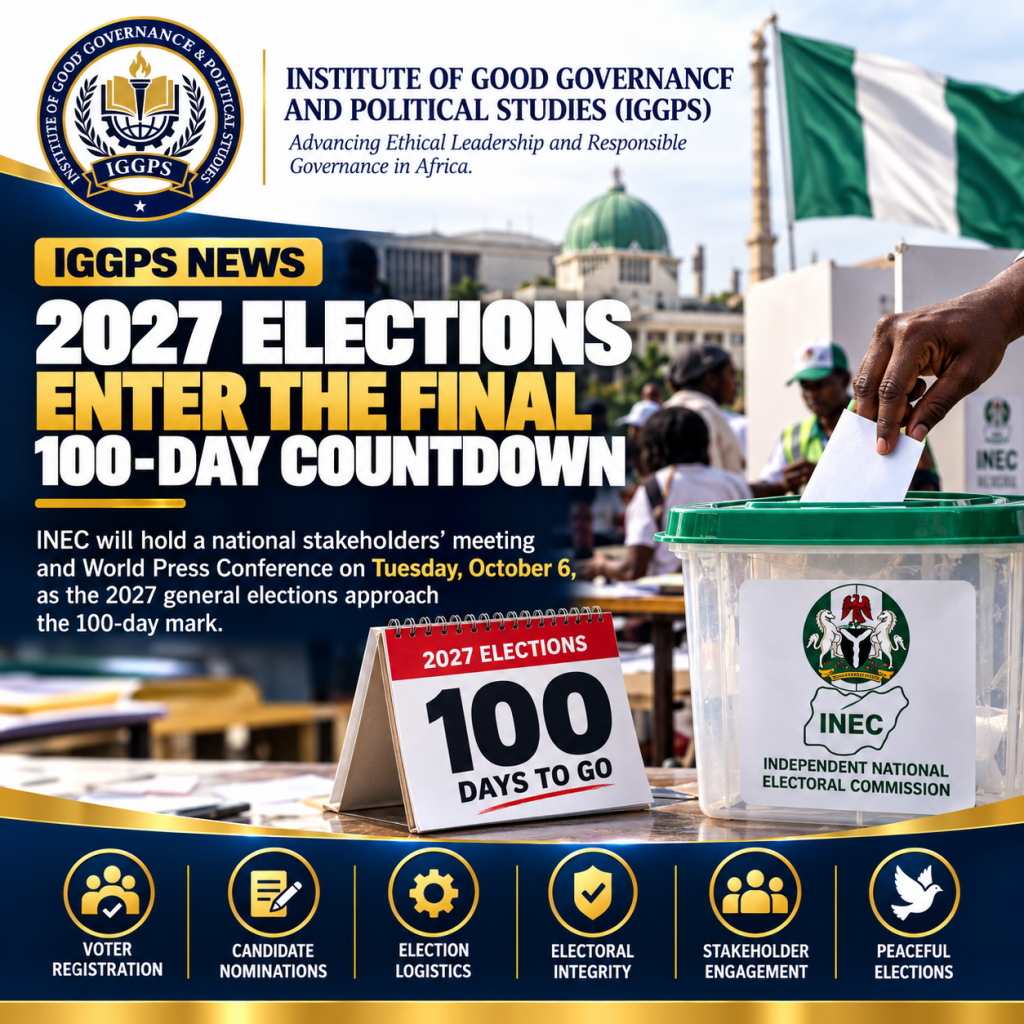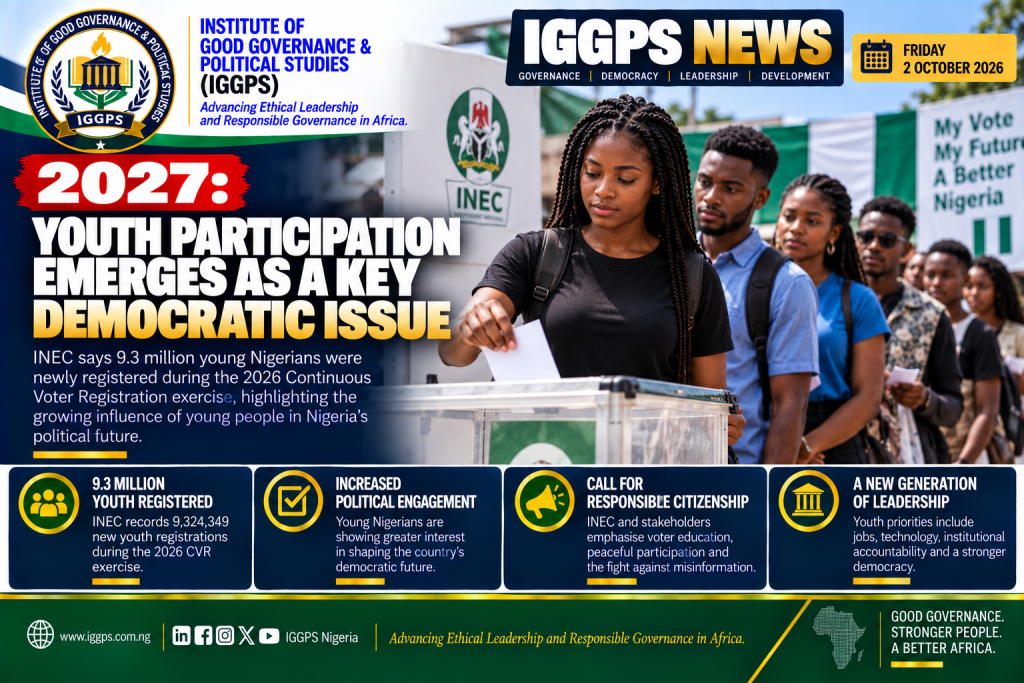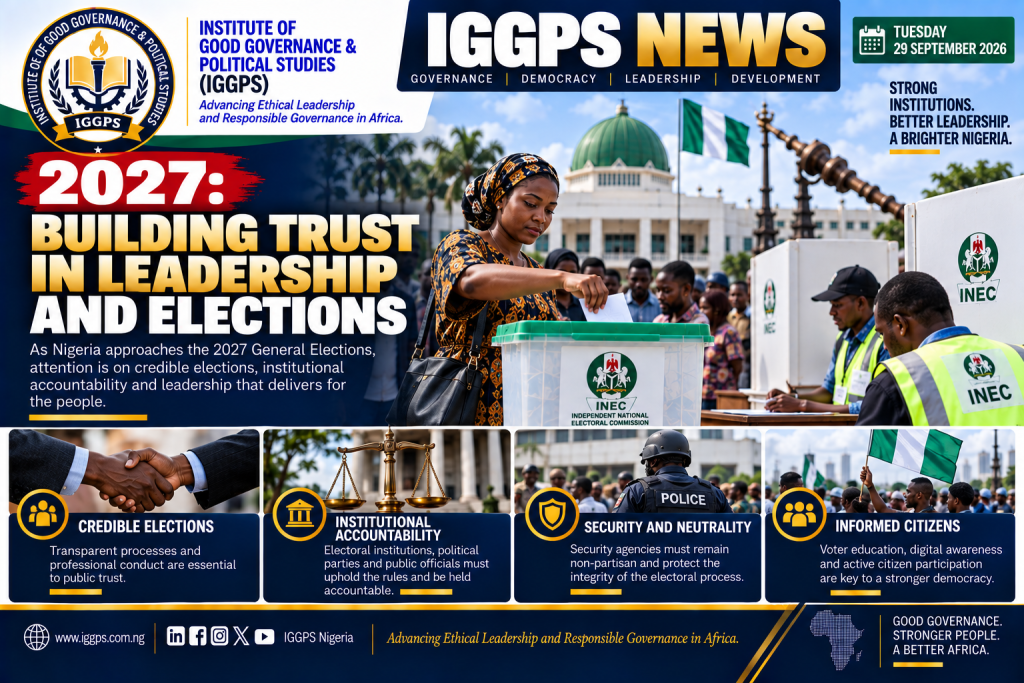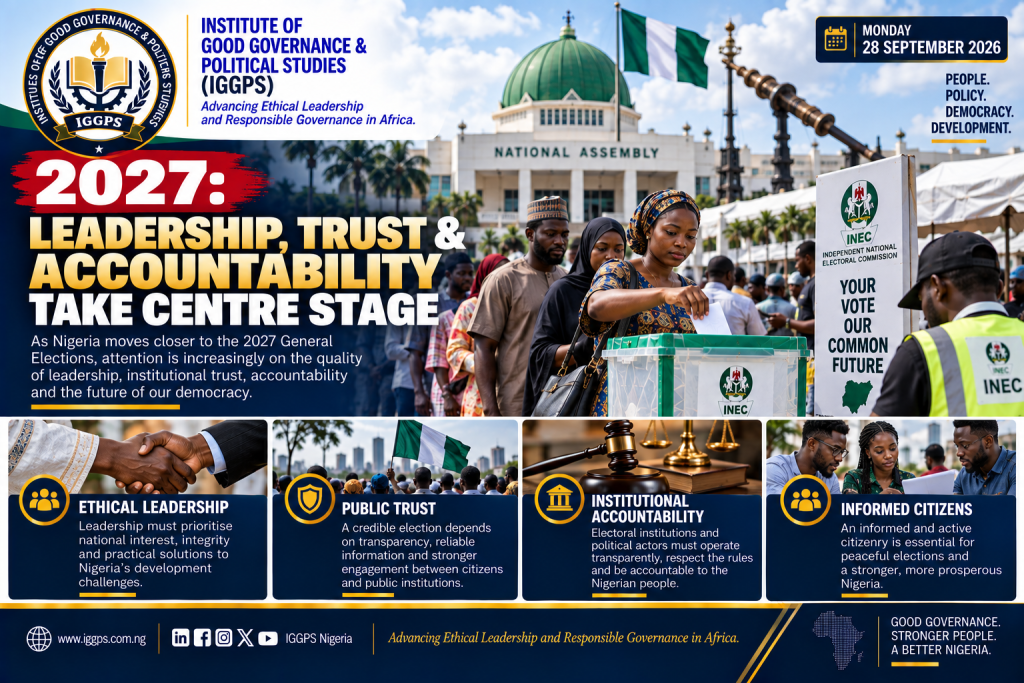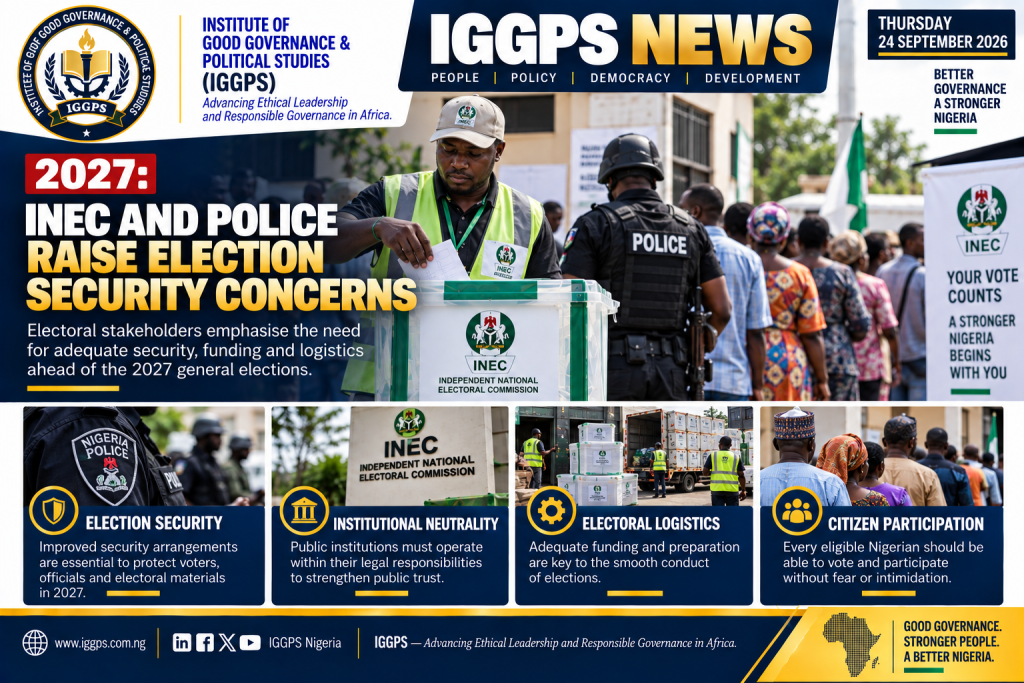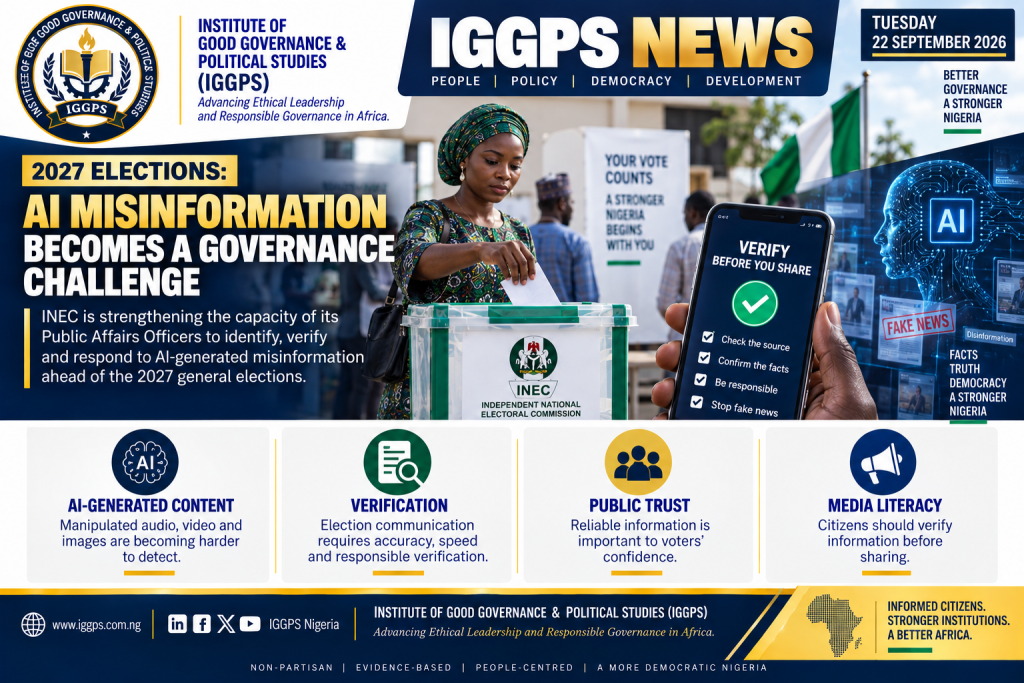

Nigeria’s political landscape enters another important phase today as campaigns for the 2027 Governorship and State Houses of Assembly elections officially commence. The Independent National Electoral Commission (INEC) timetable sets September 9, 2026, as the commencement date for public campaigns for governorship and State House of Assembly candidates, with the elections scheduled for February 6, 2027, across the states participating in the 2027 governorship cycle.
The commencement of the campaigns shifts an important part of the national political conversation from Abuja to the states. While presidential politics often dominates public attention, governors control substantial responsibilities that directly affect citizens’ everyday lives, including education, healthcare, roads, economic development, internally generated revenue, agriculture, security partnerships and the delivery of basic public services.
For the Institute of Good Governance and Political Studies (IGGPS), therefore, the beginning of the governorship campaign should not simply be viewed as the start of another political contest. It should be the beginning of a serious conversation about what Nigerians expect from state leadership.
Across the country, political parties and candidates are already mobilising their structures and supporters. Reports from different states show political actors preparing for what promises to be a highly competitive electoral season, with issues ranging from incumbency and opposition alliances to regional interests, insecurity and political succession shaping the contests.
But beneath the political calculations is a more fundamental question: what exactly are candidates asking Nigerians to vote for?
FROM PERSONALITIES TO PERFORMANCE
For many years, Nigerian political campaigns have often revolved around personalities, party loyalty, ethnic and regional considerations, political endorsements and promises of development. Yet the governance challenges confronting citizens require something more concrete.
A governorship candidate should be able to explain how his or her administration intends to create jobs, improve education, strengthen healthcare, attract investment, improve infrastructure, enhance internally generated revenue and work with security agencies to protect communities.
The campaign should therefore become an opportunity for candidates to present measurable programmes rather than general promises.
Instead of simply saying “we will transform the state,” voters should be asking: Transform it how? With what resources? Within what timeframe? And how will citizens know whether the promise has been fulfilled?
STATE GOVERNMENTS ARE TOO IMPORTANT TO BE TREATED AS POLITICAL PRIZES
The importance of state governance cannot be overstated. States are where many Nigerians experience government most directly. A poorly maintained road, an overcrowded public hospital, an under-resourced school, an unreliable water system or an inefficient state agency is experienced by citizens as a failure of governance—not as an abstract political problem.
This makes the 2027 governorship elections an opportunity for Nigerians to demand competence, transparency and measurable performance.
The campaign period should also provide candidates with the opportunity to explain how they intend to finance their programmes. With many states still heavily dependent on Federation Account allocations, fiscal sustainability remains a major governance challenge. A recent analysis found that 26 states could not generate enough internally generated revenue to cover personnel costs in 2025, underscoring the importance of stronger state-level economic management.
A serious governorship campaign should therefore address a simple question:
How will this candidate make the state more economically productive and less fiscally vulnerable?
SECURITY MUST REMAIN A GOVERNANCE PRIORITY
Security will inevitably remain central to the 2027 conversation. While national security is primarily a federal responsibility, state governments play significant roles through collaboration with security agencies, community engagement, local intelligence structures, social intervention and support for vulnerable communities.
Candidates should therefore be encouraged to present practical security strategies rather than simply promising to “fight insecurity.”
The question should be: How will the proposed administration make communities safer, support lawful security operations and address the social and economic conditions that allow insecurity to flourish?
WHAT SHOULD VOTERS DEMAND?
As campaigns begin, IGGPS believes Nigerians should place several issues at the centre of their evaluation of governorship candidates:
1. A clear economic development plan — not merely promises of empowerment, but a strategy for jobs, investment, MSMEs and productive industries.
2. Transparent state finances — citizens should know how public revenue is generated, allocated and spent.
3. Measurable education and healthcare targets — candidates should identify specific outcomes they intend to achieve.
4. Infrastructure with value for money — projects should be selected according to public need, properly procured and transparently executed.
5. Stronger institutions — governance should not depend entirely on the personality of the governor.
6. Inclusive governance — women, young people, persons with disabilities, minorities and communities across senatorial districts should have meaningful opportunities to participate.
7. Accountability for promises — campaign manifestos should become public performance contracts that citizens, civil society and the media can monitor.
THE IGGPS POSITION
The 2027 governorship campaigns present Nigeria with an opportunity to redefine what constitutes a successful political campaign.
The best candidate should not necessarily be the one who makes the biggest promise, commands the largest crowd or spends the most money. The better candidate should be the one who can demonstrate competence, integrity, a credible plan and the capacity to turn public resources into measurable public value.
There are already calls for political parties and candidates to conduct issue-based campaigns, avoid inflammatory rhetoric and focus on the socioeconomic challenges confronting Nigerians, including insecurity, unemployment, infrastructure, healthcare, education and food security.
That principle should become central to the 2027 governorship conversation.
IGGPS GOVERNANCE WATCH
“A governorship election should not only determine who occupies the Government House. It should determine what kind of governance citizens will experience for the next four years.”
As political campaigns begin across the country, Nigerians should look beyond slogans, endorsements and political theatrics.
Ask the candidates what they will do. Ask how they will do it. Ask what it will cost. Ask when it will be delivered. And, most importantly, ask how citizens will measure their performance.
Because ultimately, Nigeria does not need governors who simply win elections. Nigeria needs governors who can govern well.