
Governance & Political Studies
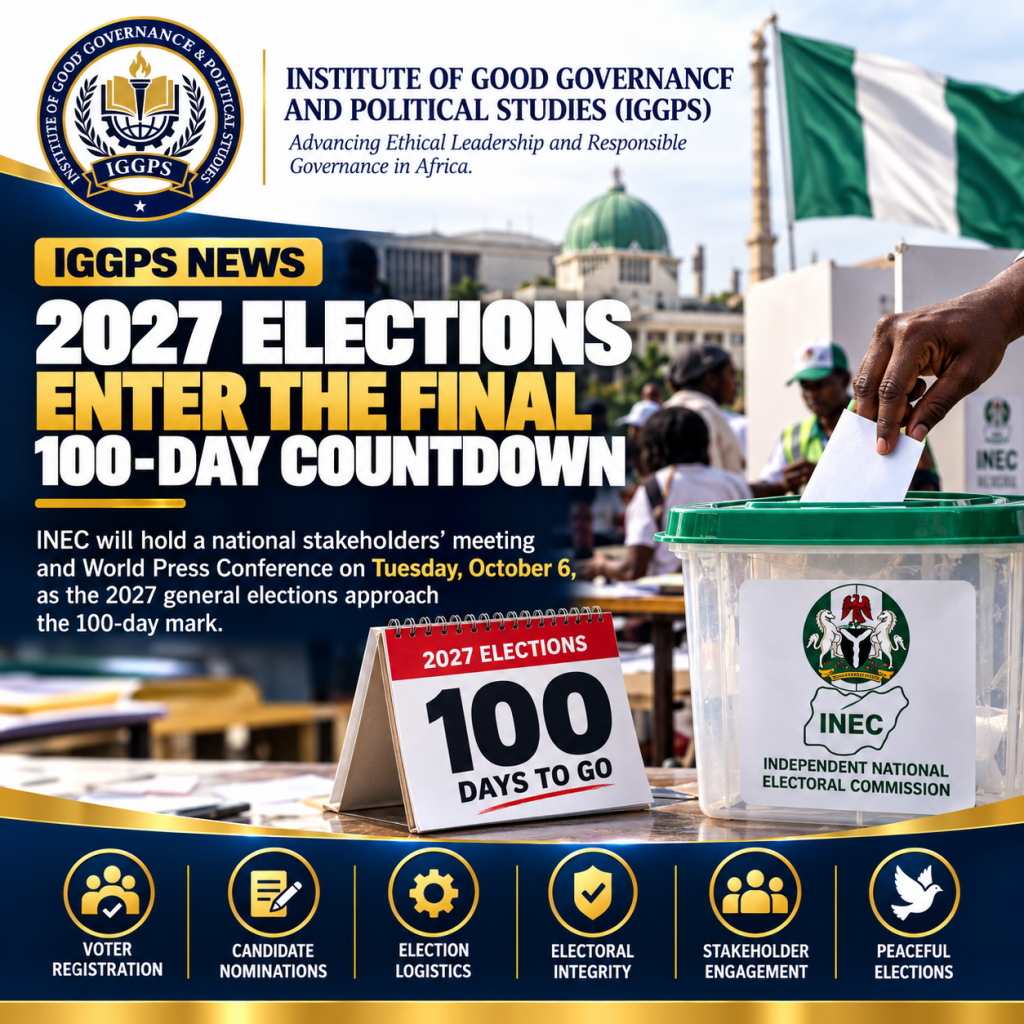
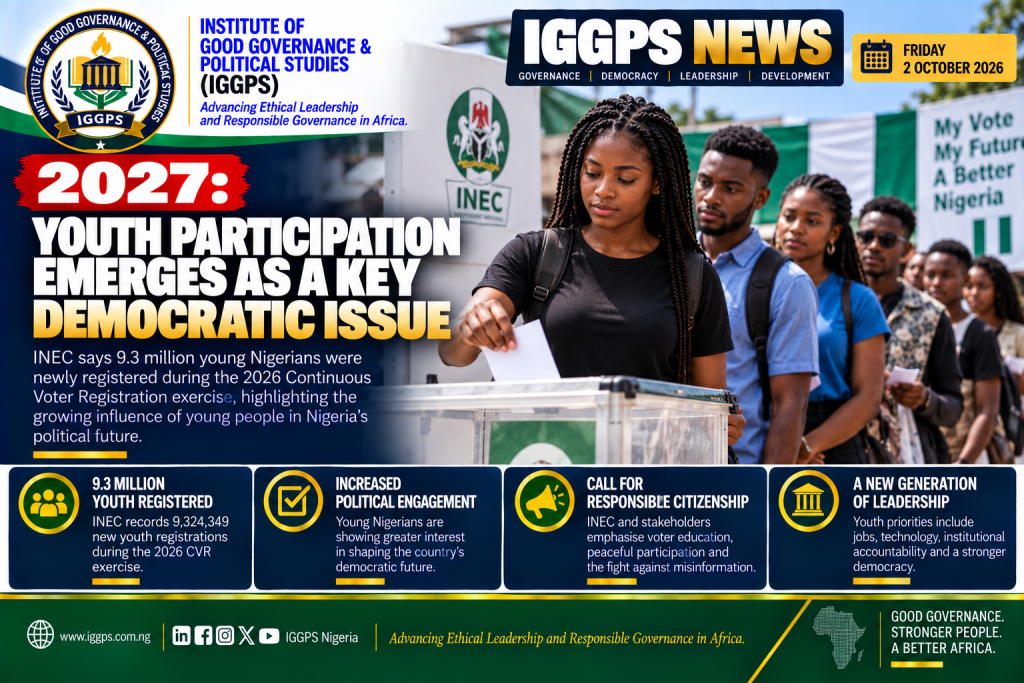
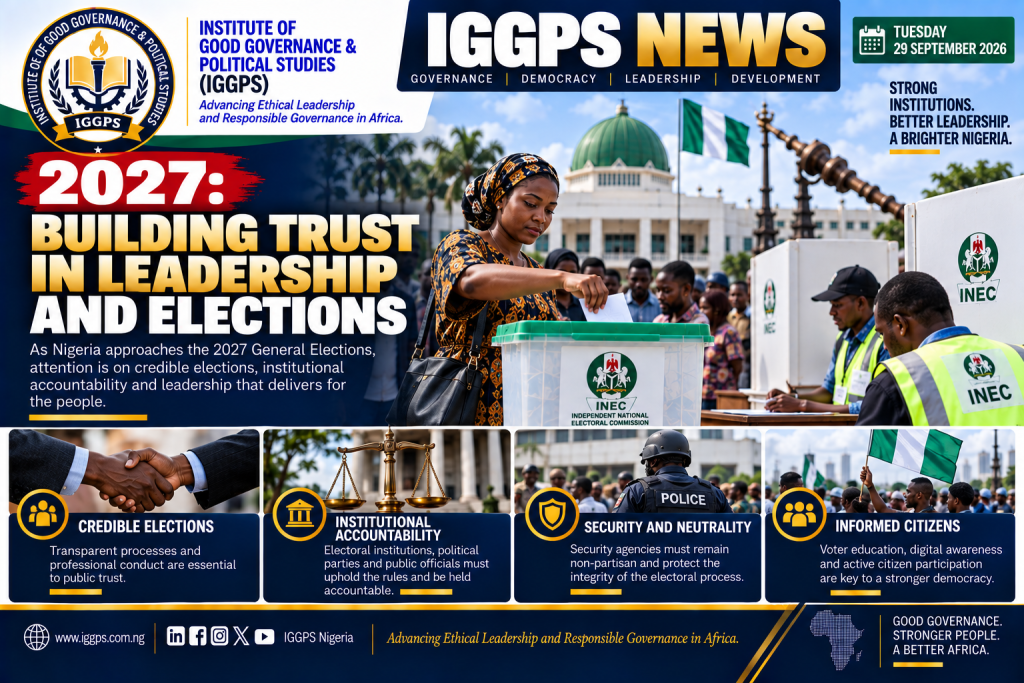
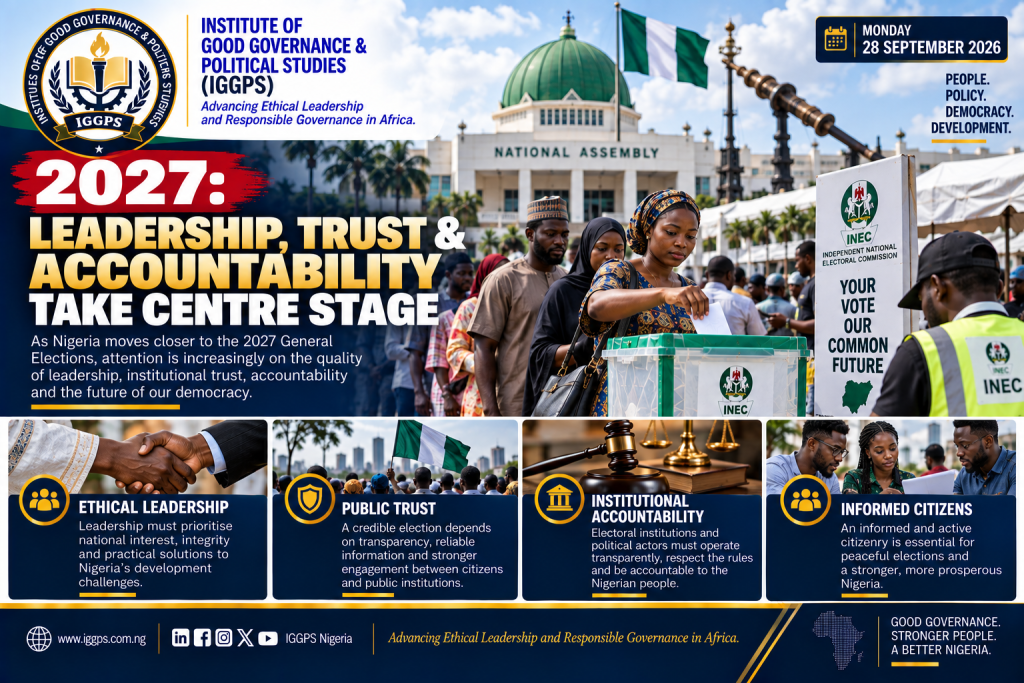
Nigeria has entered another decisive phase of its democratic journey. With campaigns for the 2027 Presidential and National Assembly elections now officially underway, political parties and candidates are increasingly taking their messages to the electorate. Rallies, consultations, endorsements, manifestos and campaign promises are beginning to dominate the national conversation.
But beneath the excitement of the campaign season lies a question that should concern every Nigerian:
What kind of leadership are we actually preparing to elect?
Elections should never be reduced to personalities, slogans, political affiliations or the size of a campaign rally. They should be about the quality of governance that candidates intend to provide once the campaign is over and the responsibility of leadership begins.
THE CAMPAIGN SHOULD BE ABOUT GOVERNANCE
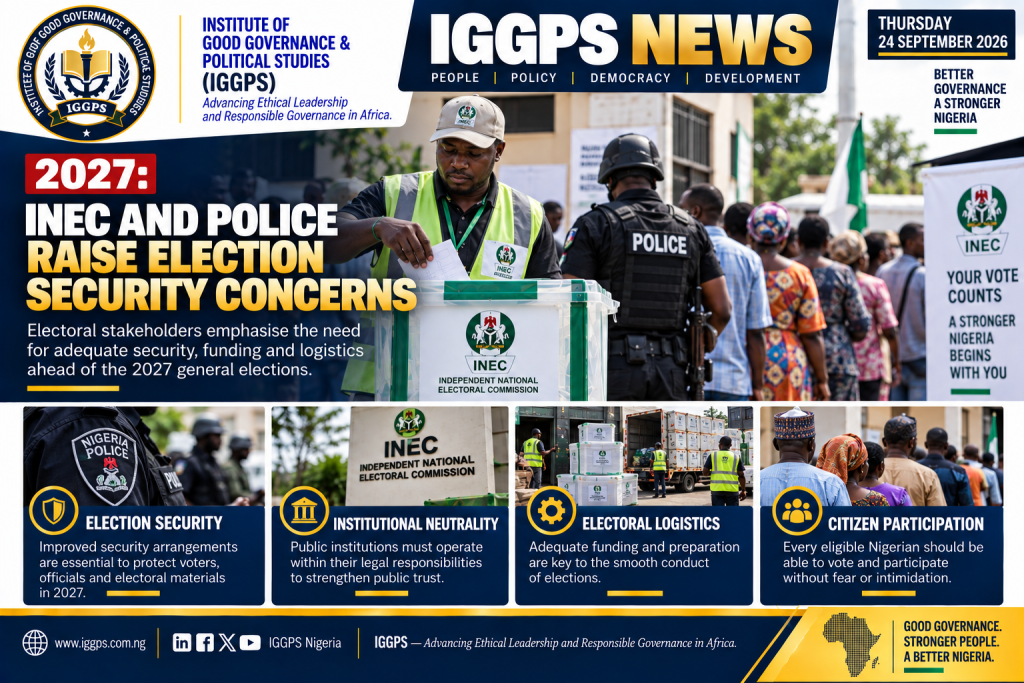
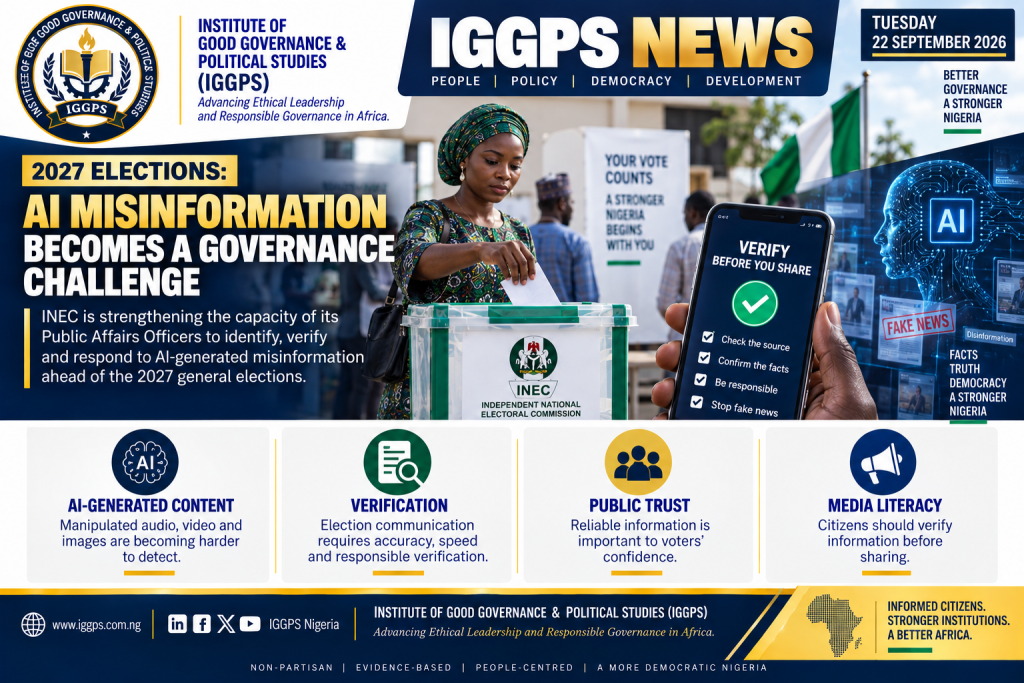
The International Republican Institute’s recent assessment of Nigeria’s 2027 electoral environment identified declining confidence in political institutions, economic hardship, insecurity, political violence and monetised competition among the challenges confronting the country’s democratic process. It also stressed the importance of peaceful political participation and credible competition.
These challenges make the 2027 campaign an opportunity for Nigerians to demand more than attractive promises.
Candidates should be challenged to explain how they will govern, how they will strengthen institutions, how they will manage public resources, how they will create opportunities, how they will improve security and how they will remain accountable to citizens.
A campaign promise without a governance framework is simply a promise.
GOOD GOVERNANCE MUST NOT DISAPPEAR AFTER ELECTION DAY
Good governance is not an election slogan. It is a continuous responsibility.
It means transparency in the management of public resources. It means accountability for decisions taken in public office. It means respect for the rule of law, effective institutions, responsible public spending, citizen participation and policies that improve the quality of life.
It also means that leaders must understand that political office is a public trust, not a personal entitlement.
INEC’s ongoing work to strengthen political-party regulation ahead of 2027 highlights the importance of party governance, compliance, transparency and public confidence in the electoral process.
VOTERS ALSO HAVE A ROLE
The responsibility does not belong to politicians alone.
Citizens must also move beyond personality-driven politics and ask difficult questions before casting their votes.
What is the candidate’s record?
What is contained in the manifesto?
Are the promises realistic and measurable?
How will the proposed programmes be funded?
What is the candidate’s position on institutional accountability?
What mechanisms will citizens have to hold the government accountable?
These are the questions that can transform an election from a contest for political power into a competition for better governance.
FROM CAMPAIGN PROMISES TO GOVERNANCE SCORECARDS
IGGPS believes Nigeria needs an electoral culture in which political promises do not disappear once votes have been counted.
Candidates should be encouraged to present clear priorities, measurable targets and realistic implementation plans. Citizens, civil society organisations, professional bodies and the media should then continue to evaluate those commitments throughout the life of the administration.
The real test of a leader is not how loudly they campaign.
It is what they do with power.
The real victory is not simply winning an election.
It is using public office to improve lives, strengthen institutions and build a society in which citizens can trust their government.
IGGPS POSITION
As Nigeria moves deeper into the 2027 political season, the Institute of Good Governance and Political Studies (IGGPS) calls for a campaign culture centred on issues, competence, accountability, peaceful participation, institutional integrity and responsible leadership.
Let candidates campaign.
Let citizens debate.
Let political parties compete.
But let GOOD GOVERNANCE remain the standard.
Because after the posters come down, the rallies end and the votes are counted, Nigeria will still need to be governed.
IGGPS — Advancing Ethical Leadership and Responsible Governance in Africa.