
Governance is often discussed in terms of policies, budgets, institutions and political leadership. But for the ordinary Nigerian, governance is much more tangible. It is the price of food at the market, the availability of electricity, the quality of public schools and hospitals, the safety of the streets, the ease of doing business and, ultimately, whether citizens believe that their government is working for them.
This makes good governance more than the ability to formulate policies. It is the ability to translate public resources, institutions and political authority into measurable improvements in the lives of citizens.
Nigeria is currently at an important point in its democratic and economic journey. The country has undergone significant economic reforms, including the removal of fuel subsidies and changes in foreign-exchange policy. These reforms have been presented as necessary steps towards building a more sustainable economy and attracting investment. At the same time, they have placed considerable pressure on households, businesses and vulnerable Nigerians, with the cost of living remaining a major concern. (Reuters)
This tension raises an important question:
What does good governance mean when the policies of government may be economically necessary but are difficult for citizens to endure?
Good Governance Must Be Measured by Outcomes
A government should not be judged solely by the number of policies it introduces or the amount of money it budgets. The real test is what those policies achieve.
The World Bank identifies six important dimensions of governance: voice and accountability, political stability, government effectiveness, regulatory quality, rule of law, and control of corruption. (World Bank)
These principles provide a useful framework for understanding Nigeria’s present circumstances.
For example, economic reform may be necessary, but good governance requires government to consider how the burden of reform is distributed. If citizens are asked to make sacrifices today for the promise of prosperity tomorrow, there must also be credible social protection, transparency about public finances and clear evidence that the sacrifices are producing results.
Citizens should not merely be told that things will get better. They should be able to see, measure and participate in the process of making things better.
Transparency Is Not Optional
One of the greatest foundations of public trust is transparency.
Citizens have a right to know how public resources are generated, allocated and spent. They should be able to understand government budgets, major public projects, borrowing and expenditure.
Nigeria has demonstrated that institutional reforms can produce meaningful improvements. A World Bank review of the State Fiscal Transparency, Accountability and Sustainability programme found significant progress among Nigerian states, including improved publication of budgets and audited financial statements, stronger budget reporting and increased citizen engagement in budget processes. (World Bank)
But transparency must not stop at publication.
A government can publish a budget and still fail to be accountable if citizens cannot determine whether the projects contained in that budget were actually delivered.
Transparency tells citizens what government says it is doing. Accountability asks whether government actually did it.
Nigeria therefore needs to continue moving from transparency to consequences—where misuse of public resources attracts institutional responses and where successful public programmes can be evaluated, replicated and sustained.
Institutions Must Be Stronger Than Individuals
Good governance cannot depend entirely on the character of whoever occupies a political office.
Nigeria’s democratic institutions must be capable of functioning effectively regardless of who is in power.
This includes the legislature, judiciary, civil service, electoral institutions, anti-corruption agencies, regulatory bodies and local government institutions.
Recent developments in Nigeria’s sporting administration also provide an interesting illustration of this principle. Following poor performances by the country’s national teams, senior officials of the Nigeria Football Federation resigned, while a fact-finding committee subsequently raised concerns about interference in player selection and coaching appointments. (Reuters)
Although football administration is not the same as political governance, the underlying principle is similar: institutions perform better when there are clear responsibilities, transparent processes and consequences for failure.
A healthy democracy should not require citizens to wait for one “good leader” to solve institutional problems. It should build institutions that make good governance possible even when individual leaders change.
Governance Must Reach the Grassroots
Good governance cannot be concentrated in Abuja or state capitals.
It must reach the communities where Nigerians actually live.
Recent moves towards grassroots governance in Anambra State, including proposed reforms to community administration aimed at addressing leadership disputes and factionalism, highlight the importance of strengthening governance at the community level. (Voice of Nigeria)
Local governance matters because citizens experience government most directly at this level.
A functioning local government should mean better roads, sanitation, primary healthcare, markets, schools, water infrastructure and community development.
When citizens cannot see the connection between government and their everyday lives, democracy becomes an abstract concept rather than a lived experience.
Citizens Also Have a Responsibility
Good governance is a two-way relationship.
Government has a responsibility to citizens, but citizens also have responsibilities to their communities and country.
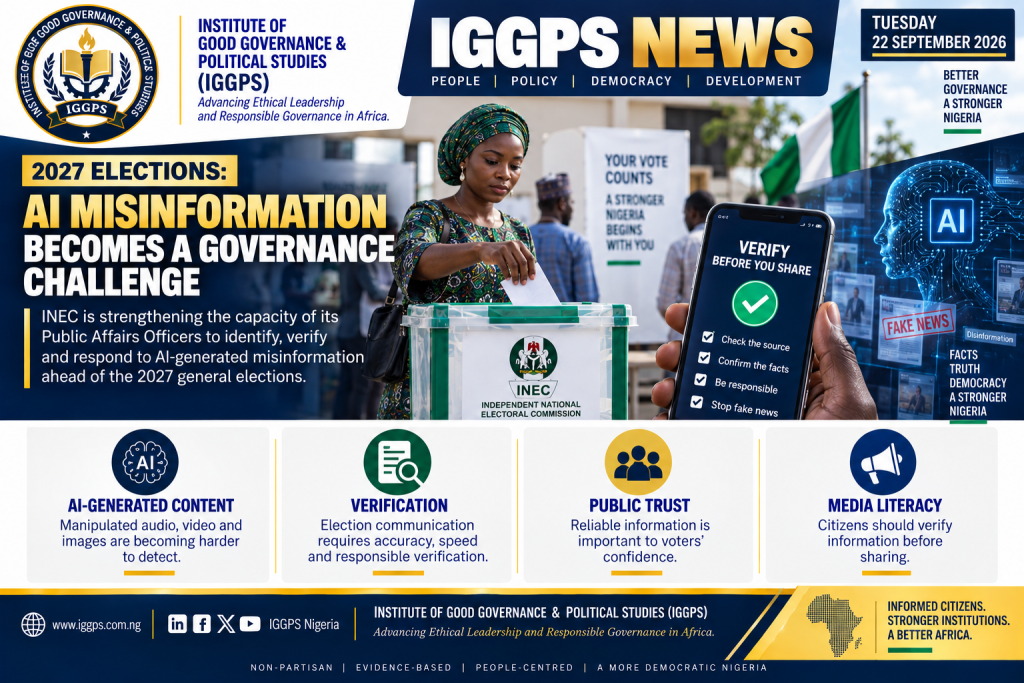
Democracy requires citizens who participate beyond election day. Citizens must demand accountability, engage with public policies, ask questions, reject misinformation and hold leaders to their promises.
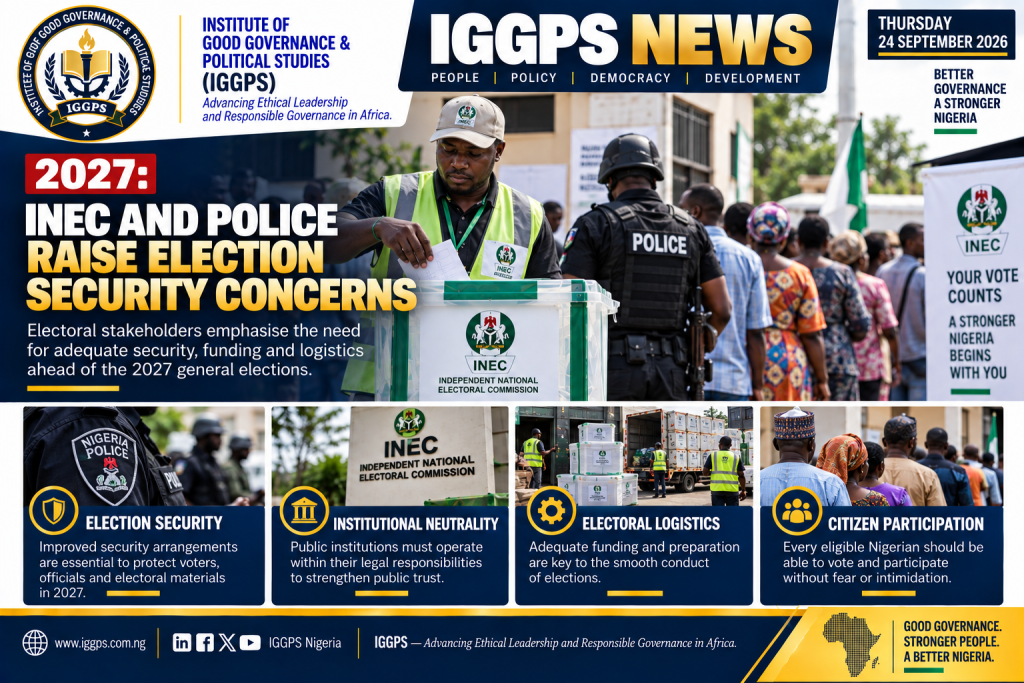
As Nigeria moves closer to another major electoral cycle, political participation must go beyond personality-driven campaigns and political slogans.
The question should not simply be:
“Who is your candidate?”
It should be:
“What is their plan? How will it be funded? What institutions will implement it? How will we measure success? And what happens if they fail?”
This is the kind of political consciousness required for a mature democracy.
The Nigeria We Want Requires Better Governance
Nigeria possesses enormous human and natural resources. The country continues to attract investment and remains strategically important to Africa’s economic future. Recent efforts to encourage investment in the deep-water oil sector, for example, demonstrate the government’s attempt to unlock new economic opportunities. (Reuters)
But investment alone cannot guarantee development.
Development occurs when institutions convert resources and opportunities into better lives.
That means building roads that last, schools that educate, hospitals that function, security systems that protect, businesses that can thrive and public institutions that citizens can trust.
The challenge before Nigeria is therefore not simply to grow the economy.
It is to build a governance system capable of ensuring that economic growth becomes inclusive development.
Good governance is not about creating a perfect government. It is about creating a government that listens, explains, delivers, corrects its mistakes and remains accountable to the people.
Nigeria does not merely need more policies.
Nigeria needs stronger institutions, more informed citizens, transparent leadership and measurable results.
The future of the country will not be determined only by who occupies political offices. It will also be determined by the quality of the institutions we build, the standards we demand and the willingness of citizens to participate in the governance of their country.
Good governance is ultimately about one fundamental principle: public power must consistently produce public good.
And that is a responsibility shared by government, institutions and citizens alike.