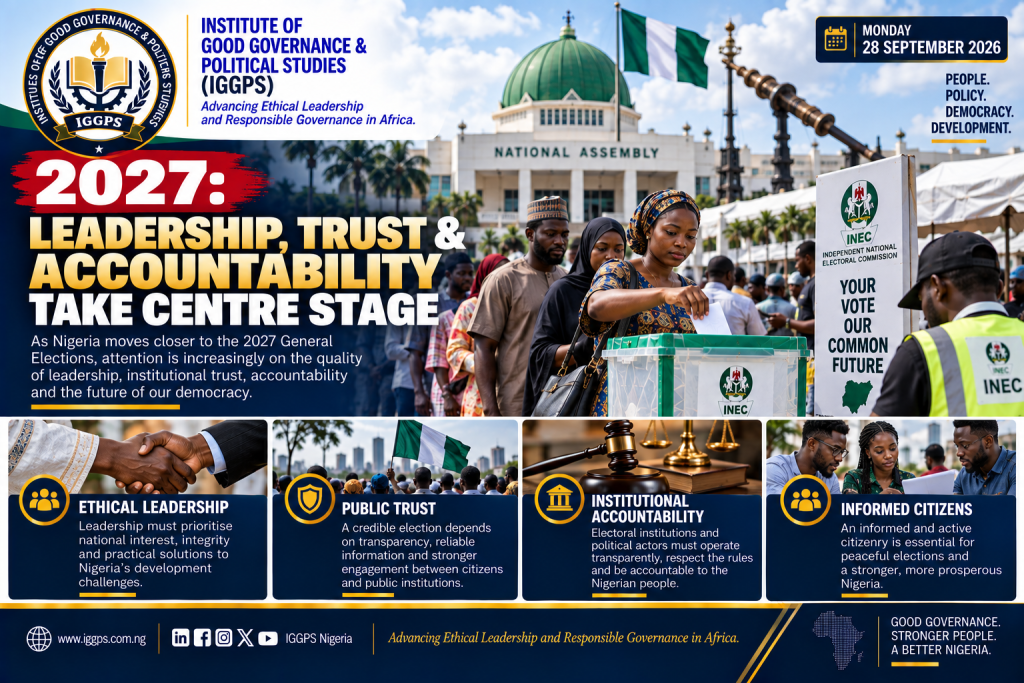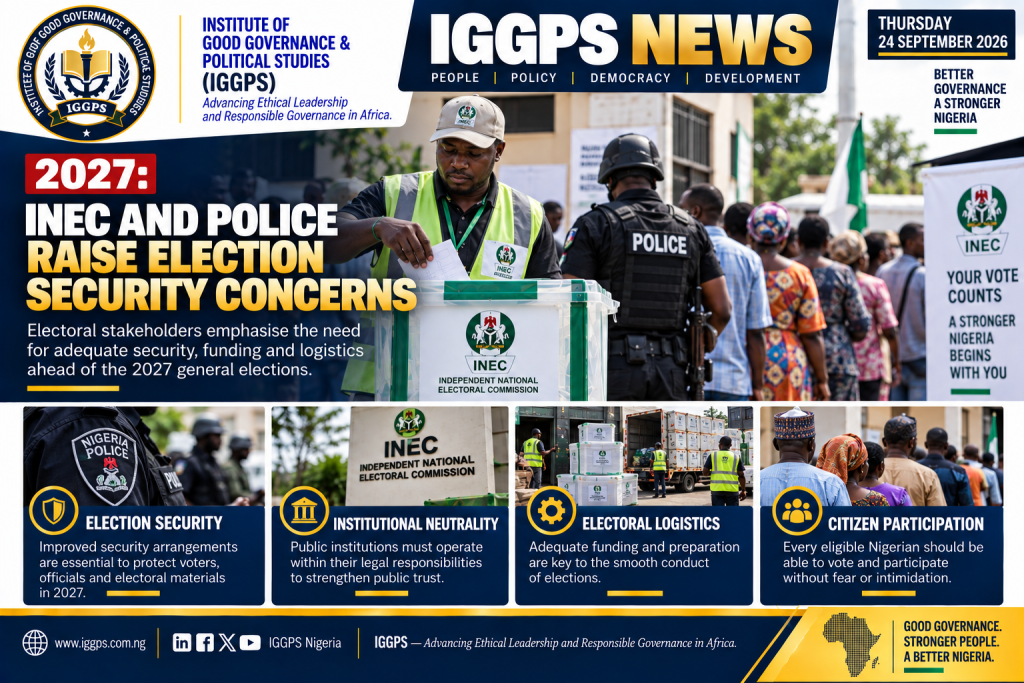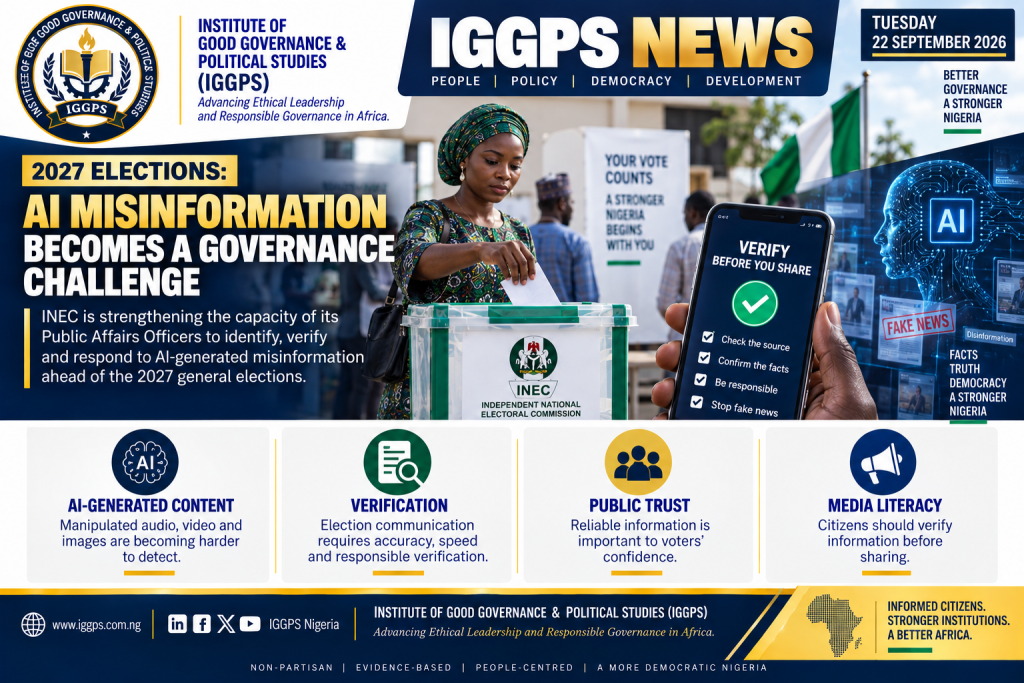

As Nigeria moves closer to another major electoral cycle, questions of good governance, transparency, institutional accountability and public trust are once again taking centre stage.
Across the country, citizens are asking increasingly important questions:
Are our institutions becoming stronger?
Are public resources producing measurable results?
Can Nigerians trust the electoral process?
And are governments at all levels sufficiently accountable to the people they serve?
These questions go to the heart of the mission of the Institute of Good Governance and Political Studies (IGGPS).
ELECTORAL INTEGRITY MOVES TO THE FRONT BURNER
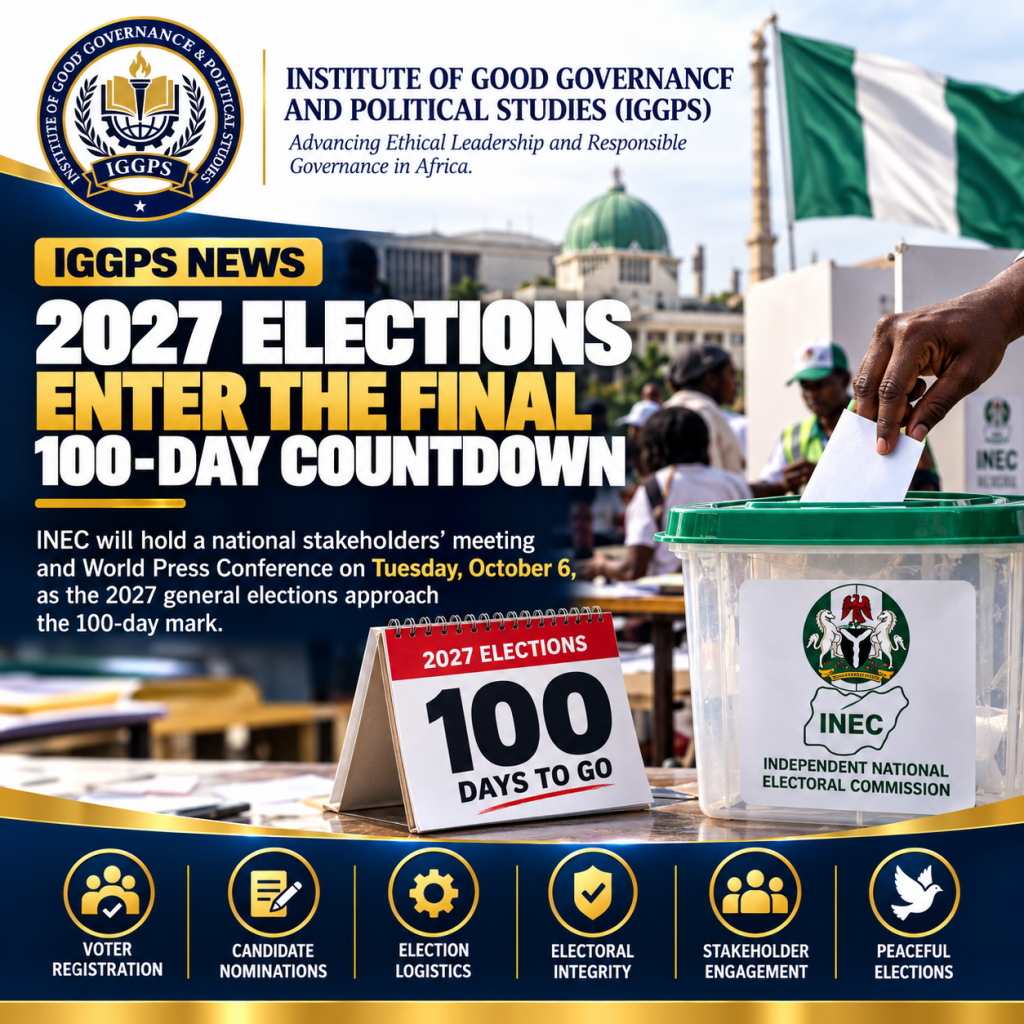
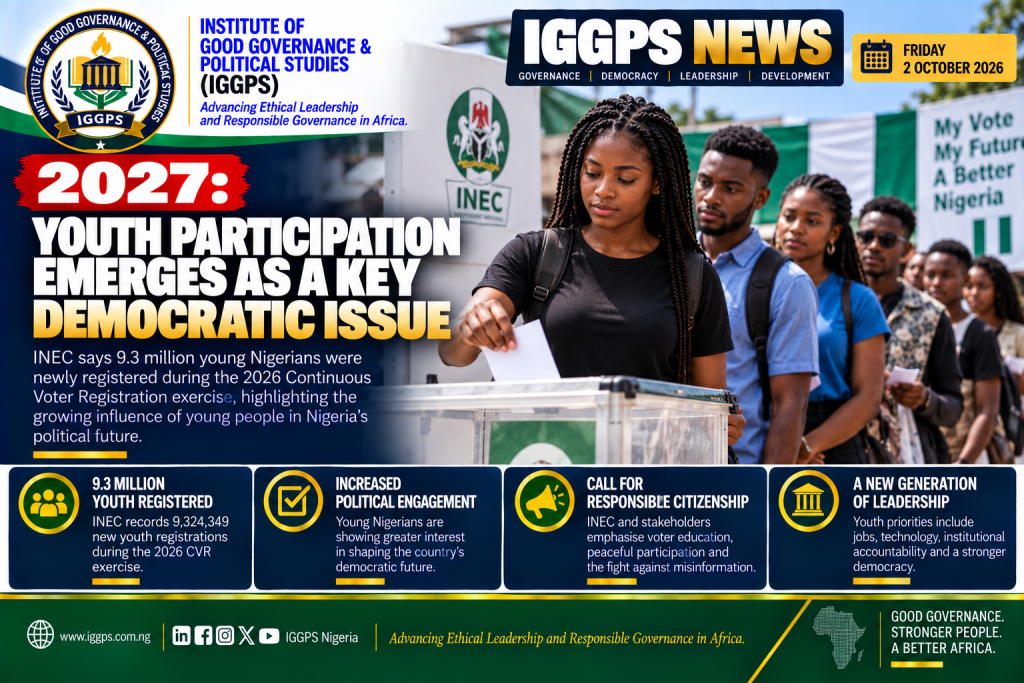
Nigeria’s evolving electoral framework and preparations for the next general elections are already generating serious discussions around transparency, security, voter confidence and institutional independence.
The Electoral Act 2026 has introduced changes affecting areas including election funding, voter registration, candidate nomination, party primaries and aspects of election administration.
The challenge, however, goes beyond legislation.
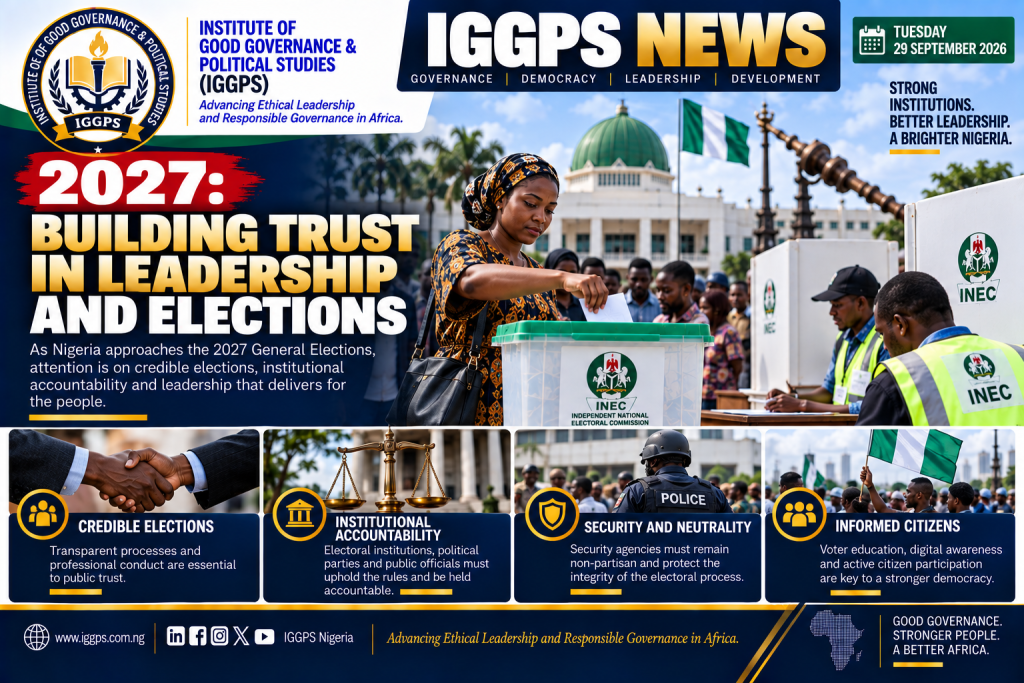
Nigeria must continue building an electoral system in which citizens can have confidence that every legitimate vote matters and institutions administering elections operate professionally, independently and transparently.
As the country moves toward another election cycle, political leaders, institutions, civil society organizations and citizens all have responsibilities to protect democratic integrity.
GOVERNANCE WATCH
Nigeria Records Progress in Extractive-Sector Transparency
There has also been encouraging news on transparency.
Global Extractive Industries Transparency Initiative assessors recently commended Nigeria for improvements in systematic disclosure of information within the country’s oil, gas and mining sectors.
Greater access to timely information about public resources is an important component of accountability.
But transparency must ultimately go beyond publishing figures.
Citizens must be able to see how public resources translate into development, infrastructure and improved quality of life.
PUBLIC FINANCE: TRANSPARENCY MUST PRODUCE RESULTS
Nigeria’s public-finance system continues to attract debate over budget transparency, expenditure, implementation and accountability.
Publishing budgets and financial information represents progress, but true accountability requires something more:
Results.
Citizens should be able to ask:
What was budgeted?
What was released?
What was spent?
What was delivered?
Who benefited?
Good governance is achieved when public expenditure can be connected to measurable improvements in education, healthcare, infrastructure, security and economic opportunity.
LOCAL GOVERNMENT AUTONOMY: THE UNFINISHED GOVERNANCE QUESTION
Another major governance issue remains the implementation of financial autonomy for Nigeria’s local governments.
Local government is the tier of government closest to ordinary citizens.
It should therefore play a major role in:
Primary healthcare.
Local infrastructure.
Community development.
Sanitation.
Local economic development.
Grassroots security.
Youth empowerment.
Strengthening local governance is not merely an administrative matter.
It is fundamental to bringing democracy and development closer to the people.
Nigeria must therefore continue the conversation about creating local governments that are financially responsible, democratically accountable and capable of delivering measurable development.
DIGITAL GOVERNANCE: TECHNOLOGY MEETS PUBLIC ACCOUNTABILITY
Nigeria is also witnessing growing calls for greater adoption of digital systems across Ministries, Departments and Agencies.
Digital governance has enormous potential.
Properly implemented, technology can reduce bureaucracy, improve record keeping, strengthen procurement processes, make government information more accessible and reduce opportunities for manipulation.
But digitalisation alone does not guarantee good governance.
Technology must serve transparency, efficiency and citizens — not simply replace paper with computers.
THE IGGPS PERSPECTIVE
The Institute of Good Governance and Political Studies believes that Nigeria’s development challenge cannot be separated from its governance challenge.
A nation cannot sustainably develop where institutions are weak, accountability is optional and public confidence is declining.
Nigeria needs a governance culture where:
Leadership means service.
Public office means responsibility.
Budgets mean measurable outcomes.
Institutions are stronger than individuals.
Elections reflect the will of the people.
Citizens participate beyond election day.
And accountability becomes a normal requirement of public leadership.
THE BIG QUESTION
As Nigeria approaches another critical phase of its democratic journey, the question should not simply be:
“Who will win the next election?”
The bigger question should be:
“What kind of governance system are we building for the next generation?”
Democracy must be measured not only by elections, but by the strength of institutions, protection of citizens’ rights, responsible management of public resources and the ability of government to deliver meaningful improvements in people’s lives.