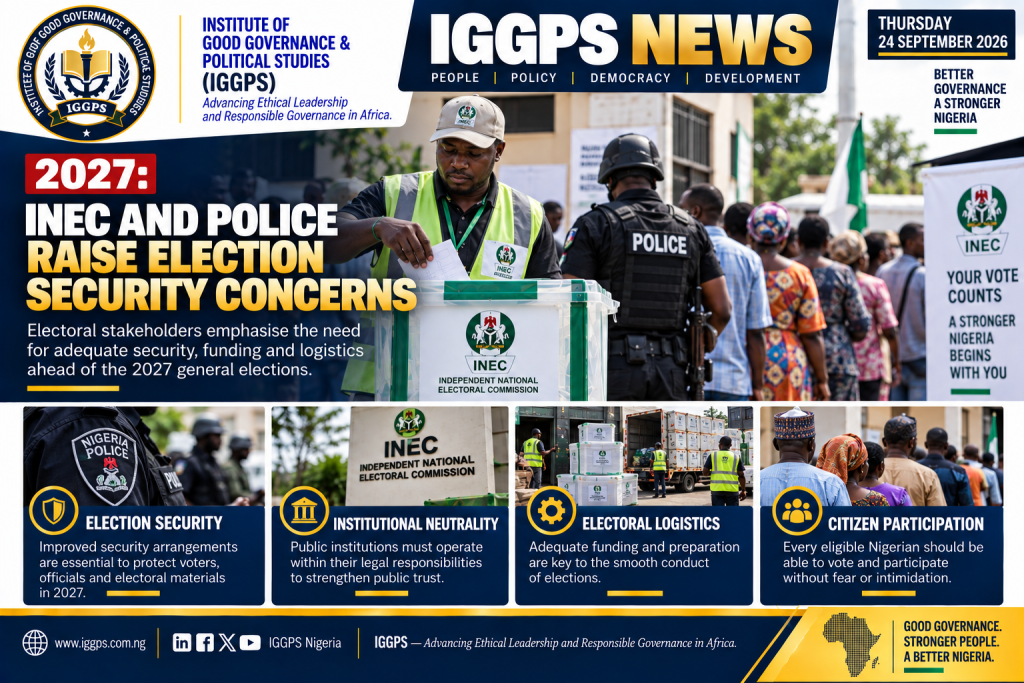

As Nigeria moves closer to the 2027 general elections, opposition political parties and political stakeholders are increasingly exploring ways to strengthen cooperation and challenge the governing political structure.
Several opposition parties, including the African Democratic Congress (ADC), Action Peoples Movement (APM), National Democratic Congress (NDC), Peoples Democratic Party (PDP), Peoples Redemption Party (PRP) and Social Democratic Party (SDP), are reportedly participating in discussions aimed at developing a framework for political cooperation. The Labour Party (LP) has, however, indicated that it will not participate in the current initiative.
The discussions are significant because Nigeria’s opposition has historically faced challenges including fragmentation, competing interests, leadership disputes and difficulties in building a unified national political strategy. The current effort therefore raises an important question: Can opposition parties move beyond individual political ambitions and develop a credible alternative governance agenda for Nigerians?
🔎 THE BIGGER ISSUE: GOVERNANCE, NOT JUST POLITICAL POWER
For IGGPS, the 2027 conversation should not be reduced to who will defeat whom at the polls.
Nigerians deserve to know what political parties intend to do differently when they obtain power. Voters should be asking questions about economic management, security, education, healthcare, employment, institutional independence, corruption, local government administration, electoral reform and accountability.
A coalition that is built only around winning an election may achieve electoral success but still struggle to deliver meaningful governance. A sustainable political alternative requires a clear policy framework, credible leadership, internal democracy, institutional discipline and measurable commitments to citizens.
🏛️ WHAT SHOULD NIGERIANS LOOK FOR IN 2027?
1. Clear policy alternatives — What will the parties do differently?
2. Credible leadership — Who can demonstrate competence, integrity and accountability?
3. Internal democracy — Can parties practise the democratic principles they promise to uphold?
4. Strong institutions — What will they do to strengthen the judiciary, legislature, electoral institutions and other public institutions?
5. Economic opportunity — How will their policies create jobs and support entrepreneurs and businesses?
6. National unity — Can political competition take place without deepening ethnic, religious or regional divisions?
🟢 IGGPS GOVERNANCE PERSPECTIVE
Nigeria does not simply need a change of political actors. Nigeria needs a higher standard of governance.
Opposition parties have every democratic right to organise, cooperate and seek political power. However, the real test should be whether they can present Nigerians with a credible, inclusive and implementable alternative for national development.
The 2027 election should therefore become more than a contest for political office.
It should be a contest of ideas, policies, competence and character.
💬 IGGPS QUESTION OF THE DAY
If opposition parties succeed in forming a stronger political alliance before 2027, what should Nigerians demand from them before giving them their votes?
Let’s move the conversation from “Who will win?” to: