
Nigeria’s governance conversation is increasingly moving from policy announcements to the question of implementation, accountability and measurable results.
One of the most significant developments this week is the Nigeria Governors’ Forum’s inauguration of a Forum of State Directors-General of Public Procurement, which brings together procurement heads from the 36 states and the FCT to strengthen transparency, accountability, professionalization, and due process in public spending.
The development comes as the Bureau of Public Procurement continues to push the digital transformation of government procurement. The BPP has made its digital submission portal mandatory for procurement-related requests and is promoting electronic government procurement as part of efforts to reduce bureaucratic delays, strengthen audit trails and improve accountability.
The Federal Government has also introduced mandatory professional certification for procurement officers, giving serving officers 12 months to obtain the required certification. The objective is to establish a common professional standard covering procurement law, contract management, ethics, compliance and value for money.
But technology and new institutions alone cannot guarantee good governance.
The critical question is whether citizens will eventually be able to see, understand and scrutinise how public resources are being committed and spent. Recent commentary has raised precisely this concern: digitising procurement can strengthen internal controls, but transparency becomes more meaningful when citizens can access information about government contracts and spending.
AND NOW, THE POLITICAL TEST
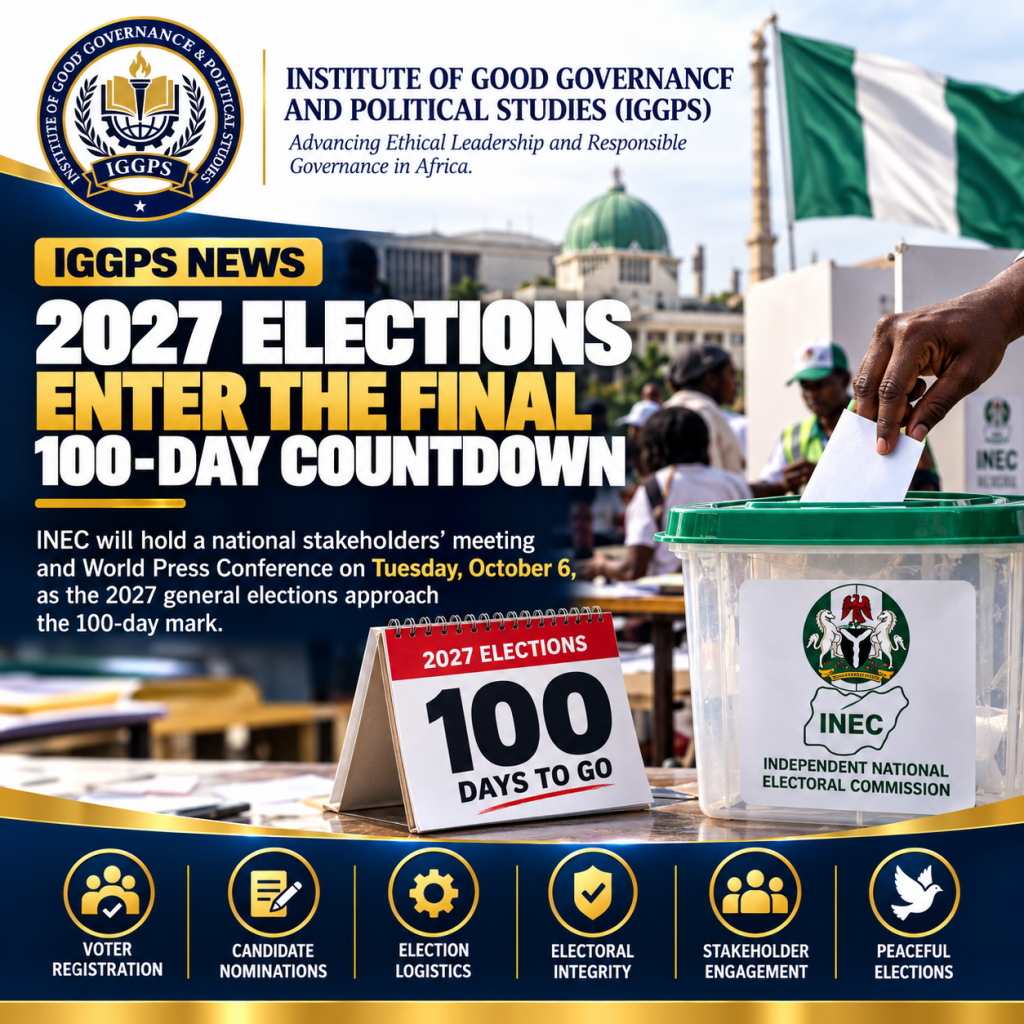
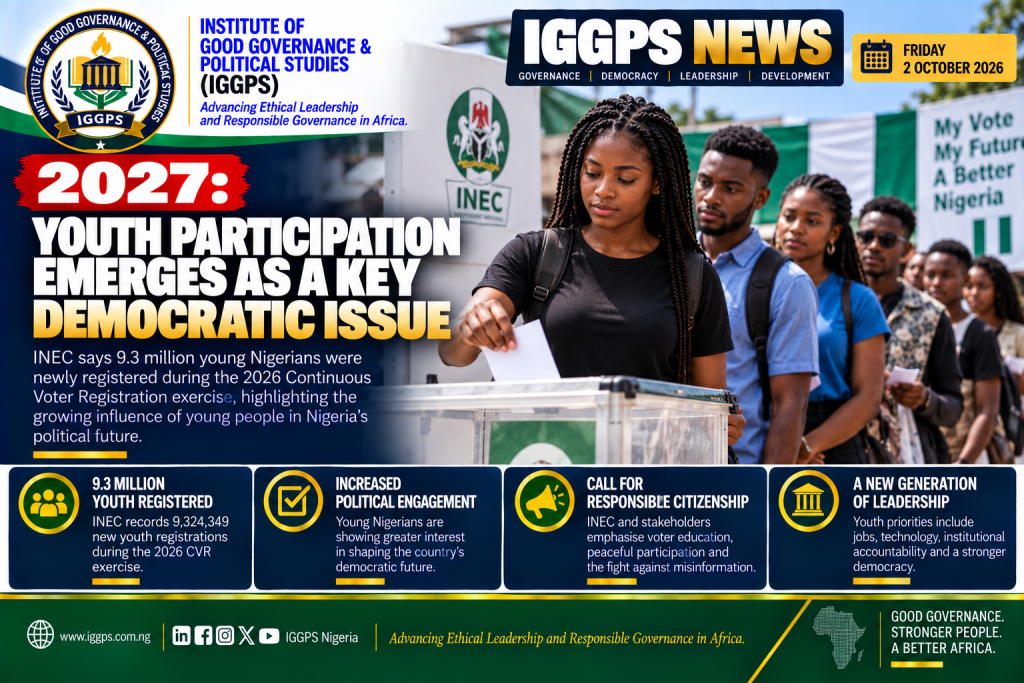
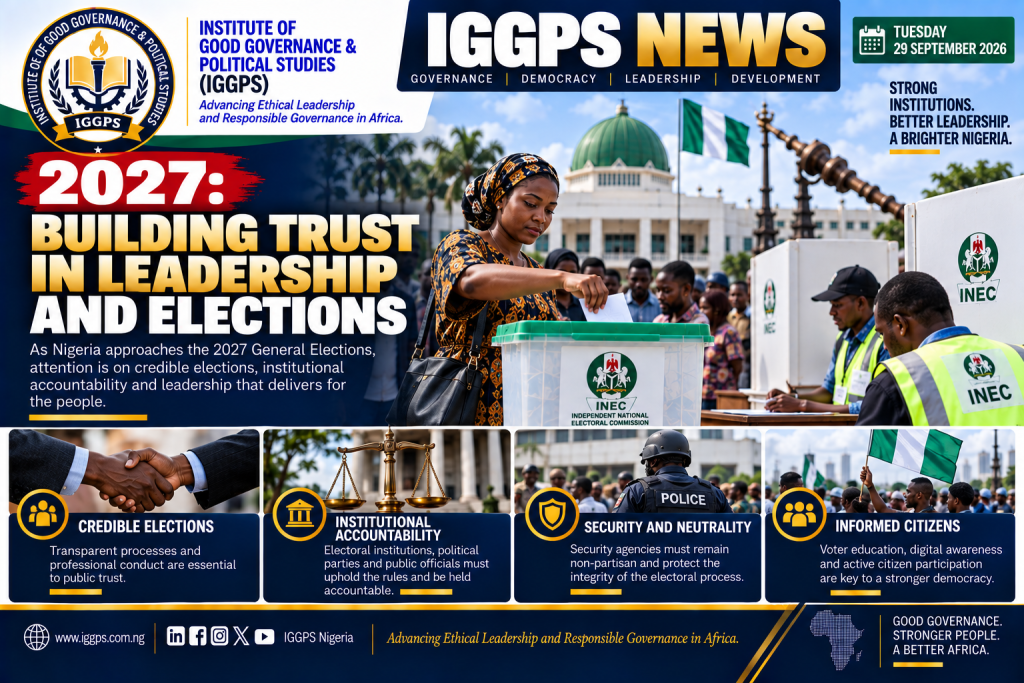
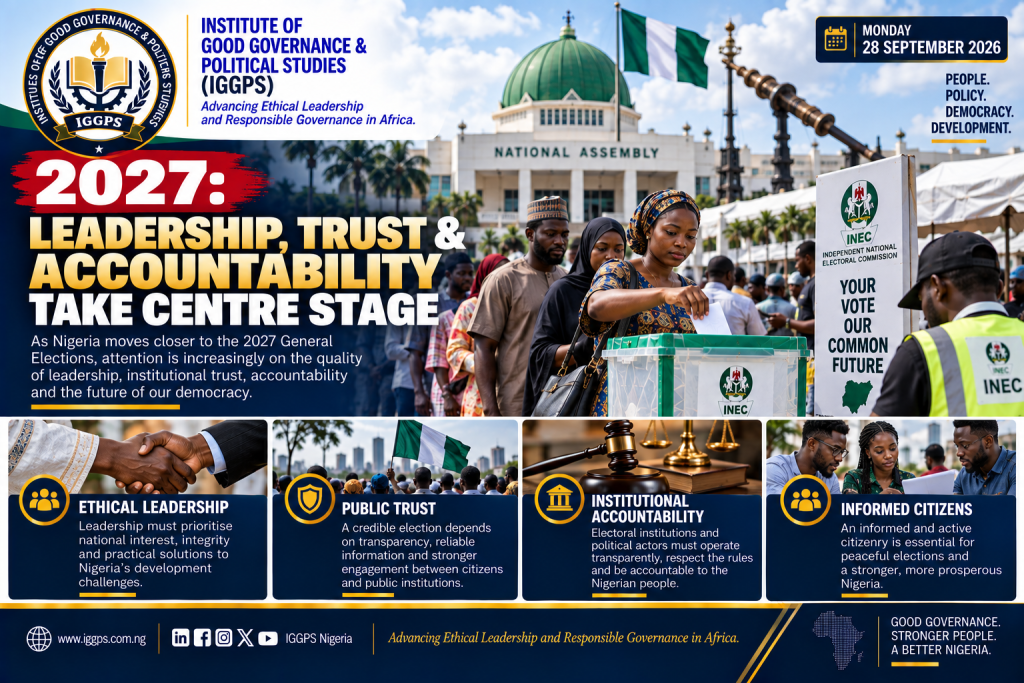
This governance conversation is becoming even more important as Nigeria enters a new phase of the 2027 electoral cycle. Governorship and State House of Assembly campaigns formally commenced on September 9, 2026, with candidates increasingly presenting programmes around security, agriculture, education, healthcare, workers’ welfare and economic development.
For Nigerians, the challenge should therefore go beyond listening to campaign promises.
What is the candidate’s plan?
How will it be funded?
What measurable targets will be established?
Who will monitor implementation?
And how will citizens know whether the government has delivered?
IGGPS GOVERNANCE PERSPECTIVE
Good governance is not simply about announcing reforms.
It is about building institutions that work, spending public resources responsibly, making government information accessible, enforcing accountability and delivering measurable improvements in citizens’ lives.
As Nigeria approaches 2027, the standard for political leadership should increasingly be performance, transparency, competence and accountability—not promises alone.
IGGPS — Advancing Ethical Leadership and Responsible Governance in Africa.